提示:
1、投稿方式:在线投稿。
2、期刊网址:
http://journals.lww.com/jgpt/Pages/default.aspx
3、投稿网址:http://www.editorialmanager.com/jgpt/
4、官网邮箱:allisonLK.prof@gmail.com(编辑)
5、期刊刊期:季刊,一年出版4期。
2021年8月26日星期四
投稿须知【官网信息】
Instructions for Authors
Last updated 11/06/2020
General Information and Instructions to Authors
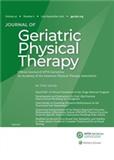
The Journal of Geriatric Physical Therapy (JGPT) is the official publication of APTA GERIATRICS (https://geriatricspt.org/), an Academy of the American Physical Therapy Association. The JGPT is published four times a year and offers articles that advance the science and practice of geriatric physical therapy.
JGPT Mission Statement
“The Journal of Geriatric Physical Therapy is the leading source of clinically applicable evidence for achieving optimal health, wellness, mobility, and physical function across the continuum of health status for the aging adult.” Evidence published in the JGPT supports the provision of best practice physical therapy and facilitates advocacy for optimal aging.
Important information for authors regarding the three-stage review process
All manuscripts submitted to the JGPT are first screened by the Editor-in-Chief for suitability, scientific impact and rigor, clinical relevance, originality, proper format, and high-quality scientific writing in American English; please see below for further clarification of these requirements. Acceptable manuscripts are then assigned to an Associate Editor who performs a second Editor’s review. Submissions judged to have strong scientific merit and substantial clinical relevance then undergo masked peer review. Authors may wish to read the JGPT Reviewers Read-Along checklist to obtain a better understanding of reviewer expectations; download here: http://links.lww.com/ES/A149. Please note, this Reviewers Read-Along checklist is for your reference only, it is not a standardized guidelines checklist and should not be included with your submission.
Suitability: Manuscripts may address any scientific or clinical aspect of physical therapy care for older adults. Manuscripts may focus on, for example, health promotion/wellness care, risk factor abatement, examination/evaluation methods and strategies, performance on clinical measures of well and impaired older adults, efficacy/effectiveness of interventions to reduce risk, decrease impairment, and/or improve function and participation in aging adults with activity restriction, movement dysfunction in later life, and theoretical models of examination/evaluation or care of older adults. Studies not focused on older adults, and those exploring age-related topics that are not pertinent to the actual clinical practice of geriatric physical therapy, are not considered a good match.
Scientific Impact and Rigor: The reported study should do all of the following:
Address an important problem and add new knowledge to bridge a knowledge gap
Include sufficient sample size(s) to achieve adequate statistical power
Use reliable and valid measures appropriate to the population under study
For multivariate studies, employ multivariate statistical analyses with correction to control for inflated Type 1 error, e.g., MANOVA or RM-MANOVA with planned post-hoc tests. When necessary, control for baseline between-group differences, e.g., MANCOVA or RM-MANCOVA with planned post-hoc tests.
Report both statistical and clinical significance values
Clinical Relevance: The reported study should do all of the following:
Address a problem that is (1) within the [geriatric] physical therapy scope of practice, and (2) clinically important to address
Include a population that represents older adults with a health condition commonly seen in, or appropriate for referral to, geriatric physical therapy practice; studies reporting normative data on healthy older adults exempted.
Explore a practice component that is within the [geriatric] physical therapy scope of practice, and related to improved client care, management, and outcomes
Comparative effectiveness studies are highly clinically relevant, e.g., a comparison of two or more interventions, two or more screening or diagnostic tests, etc.
These studies are the most relevant when the comparison group or test is highly valid, e.g. comparing two exercise programs (e.g., “usual care” versus studied intervention) is more valid than comparing exercise to no exercise; adding a third group with no exercise (control) is even better.
Use client-centered outcome measures
Measures of physiologic variables (e.g., muscle mass, bone density, etc.) and impairment-level variables (body structure and function, such as strength, range of motion, etc.) by themselves (in the absence of additional measures) are less clinically relevant than activity- and participation-level measures (functional independence or community ambulation, return to life roles, etc.) and quality of life measures. However, studies that examine the relationship between physiologic or impairment-level variables and activity-level, participation- level, or quality of life measures are also highly clinically relevant.
……
更多详情:
https://edmgr.ovid.com/jgpt/accounts/ifauth.htm